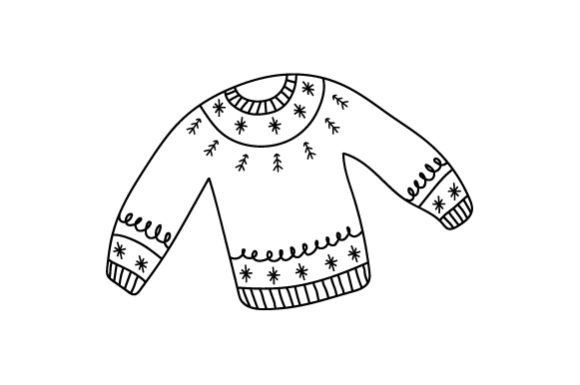
A Christmas Sweater Design I'd Actually Embroider
When a new embroidery design lands in my library, my first question is always: "Will this look good in thread?" I'm not just judging it as a graphic on a screen. I'm thinking about how it will stitch out, how it will feel on fabric, and what kind of project it will truly elevate. That's the lens I'm using with this Christmas Sweater Line Art.
The Quiet Charm of a Simple Sweater Shape
First impression? It's wonderfully understated. The mood it creates is nostalgic and cozy, not loud or overly festive. The shape is classic—a simple sweater outline—and the line art inside suggests those familiar holiday motifs without being overly detailed. This is a design with a quiet visual personality. It doesn’t scream "Christmas"; it whispers it. That makes it incredibly versatile. It feels like it belongs on a handmade item meant for close appreciation, not just a quick seasonal decoration.
In my mind, I immediately pictured it stitched onto a linen pillow cover for a cozy living room, or as a small, thoughtful detail on the corner of a cotton tea towel. It has that giftable quality—it feels personal and crafted.
Where This Design Shines in Real Projects
This Christmas Sweater Line Art is a strong candidate for projects where clean, recognizable form is more important than dense, colorful detail. Think of it as an elegant accent.
On custom apparel like a sweatshirt or t-shirt, a single sweater outline in a contrasting thread color—maybe a deep red on grey heather—can be a sophisticated holiday touch. For baby clothes or nursery decor, its simplicity is perfect; it's sweet without being overwhelming. As an embroidered patch, it would be crisp and easy to apply, great for a tote bag or apron.
I also see it working beautifully in the craft business space. An Etsy seller creating a line of holiday kitchen towels could use this as a consistent, branded element. For digital product sellers, this design is a clean asset for printable mockups, easily showcasing a finished product on a digital preview. Its straightforward form translates well across mediums.
The Practical Considerations for Stitching
This is a line art design, so its performance hinges on clarity. The open areas mean lower stitch density, which is a plus for speed and fabric integrity, especially on thinner materials like a standard t-shirt. You won't be wrestling with heavy fill stitches here.
However, this also means you need to be thoughtful about application. On highly textured fabrics, like a thick sweater (ironically), the clean lines might get lost. On stretchy fabric, using a proper stabilizer is non-negotiable to keep those outlines from distorting. And on dark fabric backgrounds, you'll need to carefully choose your thread color for contrast—a white or light silver satin stitch could look stunning.
The design's strength is its simplicity, but that simplicity requires precision. Small details within the sweater outline need to be checked in a test stitch. Tight corners in the line art could be challenging if your machine embroidery file isn't optimized for sharp turns. This isn't a design I'd recommend for a very small hoop size; give it some space to breathe so all the lines remain distinct.
Spots to Approach with Caution
While versatile, I'd use this design carefully on curved surfaces like caps. The flat, rectangular sweater shape might not conform naturally to the curve without clever placement. Also, if the design includes any tiny interior lettering (like a "Merry" banner inside the sweater), that needs extra scrutiny in a test run. Dense stitch areas aren't a concern here, but the risk is in the fine lines becoming blurred if the stitch settings aren't right.
For products destined for frequent washing, like a kitchen towel, I'd recommend a robust thread and possibly a slightly thicker satin stitch width for the outlines to ensure longevity.
Why This Design Adds Value to Your Work
From a professional standpoint, using a design like this well affects more than just the stitchout. It impacts customer trust. A clean, well-executed line art piece on a handmade product signals attention to detail. It enhances giftability—it feels thoughtful and custom, not mass-produced. For a small shop product, it can contribute to brand consistency if used as a signature holiday motif across your line.
The visual appeal is in its recognizability and neatness. It doesn't try to do too much, which often ends up looking more professional than an overly busy design. For buyer engagement, on an Etsy listing or craft fair table, a tote bag with this neat embroidery can draw people in because it's easy to understand and aesthetically pleasing.
My Notes for Your Embroidery Project
Before you run this on your final project, here’s my standard advice. Always test the design on scrap fabric first, using the same material you plan for the final product. This lets you review stitch density and inspect small details. Check thread color contrast against your background fabric; sometimes a mockup in black and white can help judge the value contrast.
Please, confirm your hoop size. The provided files—SVG, Transparent PNG, EPS, and DXF—are great for flexibility, but you need to ensure your machine embroidery file is set to a hoop size that accommodates the entire design without cramping it. Use a proper stabilizer suited to your fabric. And crucially, check whether the design works for both personal and commercial projects by confirming the licensing terms before selling finished items or digital products. That information isn't detailed here, so you must verify it.
In the end, this Christmas Sweater Line Art is a design I'd reach for when I want to add a touch of holiday spirit without the heavyweight commitment of a full, colorful scene. It's a designer's choice for when you need something that looks embroidered, not just printed, and feels handmade in the best possible way.